
"coffee trunk development"
300 article(s) found

The establishment of a coffee garden
1. The environmental conditions of land selection, planning and reclamation are closely related to the growth and development of coffee, which should be determined according to the growth habits and environmental requirements of coffee. Try to avoid choosing lowlands where cold air is easy to accumulate and condense frost; coffee roots are good, so choose well-drained and loose soil; coffee needs a calm wind environment, so in areas where there is no primary forest, consideration should be given to planning windbreaks.

The various parts of the coffee plant decompose the shallow root crop of coffee.
Coffee is a shallow root crop, and the plants propagated with seeds have conical roots. Root system refers to the general name of root. The root morphological distribution and depth of shade varieties / soil conditions and agricultural technical measures are different. From the point of view of varieties, the roots of small / medium grain species are shallower, while those of large grain species are deeper. Under normal circumstances, there is a thick and short taproot and many well-developed lateral roots. Yunnan small-grain coffee has a 4-year-old fruit.

The backbone of coffee trees.
Coffee is a shallow root crop, and the plants propagated with seeds have conical roots. Root system refers to the general name of root. The root morphological distribution and depth of shade varieties / soil conditions and agricultural technical measures are different. From the point of view of varieties, the roots of small / medium grain species are shallower, while those of large grain species are deeper. Under normal circumstances, there is a thick and short taproot and many well-developed lateral roots. Yunnan small-grain coffee has a 4-year-old fruit.
The backbone of the coffee tree
Coffee is a shallow root crop, and the plants propagated with seeds have conical roots. Root system refers to the general name of root. The root morphological distribution and depth of shade varieties / soil conditions and agricultural technical measures are different. From the point of view of varieties, the roots of small / medium grain species are shallower, while those of large grain species are deeper. Under normal circumstances, there is a thick and short taproot and many well-developed lateral roots. Yunnan small-grain coffee has a 4-year-old fruit.
The basic knowledge of coffee tree planting
Coffee is a shallow root crop, and the plants propagated with seeds have conical roots. Root system refers to the general name of root. The root morphological distribution and depth of shade varieties / soil conditions and agricultural technical measures are different. From the point of view of varieties, the roots of small / medium grain species are shallower, while those of large grain species are deeper. Under normal circumstances, there is a thick and short taproot and many well-developed lateral roots. Yunnan small-grain coffee has a 4-year-old fruit.
Boutique Coffee basic knowledge the backbone of coffee trees
Coffee is a shallow root crop, and the plants propagated with seeds have conical roots. Root system refers to the general name of root. The root morphological distribution and depth of shade varieties / soil conditions and agricultural technical measures are different. From the point of view of varieties, the roots of small / medium grain species are shallower, while those of large grain species are deeper. Under normal circumstances, there is a thick and short taproot and many well-developed lateral roots. Yunnan small-grain coffee has a 4-year-old fruit.
Organ classification of coffee
Coffee is a shallow root crop, and the plants propagated with seeds have conical roots. Root system refers to the general name of root. The root morphological distribution and depth of shade varieties / soil conditions and agricultural technical measures are different. From the point of view of varieties, the roots of small / medium grain species are shallower, while those of large grain species are deeper. Under normal circumstances, there is a thick and short taproot and many well-developed lateral roots. Yunnan small-grain coffee has a 4-year-old fruit.

Organ Classification of Coffee Coffee belongs to shallow root crops
Coffee is a shallow root crop, and the plants propagated with seeds have conical roots. Root system refers to the general name of root. The root morphological distribution and depth of shade varieties / soil conditions and agricultural technical measures are different. From the point of view of varieties, the roots of small / medium grain species are shallower, while those of large grain species are deeper. Under normal circumstances, there is a thick and short taproot and many well-developed lateral roots. Yunnan small-grain coffee has a 4-year-old fruit.
Basic knowledge of high-quality coffee classification of various parts of coffee trees
1. Root coffee is a shallow root crop, and the plants propagated by seeds are conical roots. Root system refers to the general name of root. The root morphological distribution and depth of shade varieties / soil conditions and agricultural technical measures are different. From the point of view of varieties, the roots of small / medium grain species are shallower, while those of large grain species are deeper. Under normal circumstances, there is a thick and short taproot and many well-developed lateral roots. Yunnan small-grain coffee has been growing for 3-4 years.

How about American Shudun City Coffee? a brief understanding of the development of Xia Shudun City Coffee
Professional coffee knowledge exchange more coffee bean information Please pay attention to Coffee Workshop (Wechat official account cafe_style) Tree Pier City is a nickname for Portland, Oregon, in the 19th century, in order to adapt to the rapid population growth, Portland cut down forests to take land, the city can be seen everywhere uncleared stumps, hence the name. In 1999, the 20-year-old Duane founded the Shudun City Coffee Bakery in Portland.
The branches of coffee
The branches of coffee can be divided into the following categories according to their growing position and growth direction: a branch: there are two kinds of buds in the axils of the main leaves of coffee. The opposite branch is drawn laterally from the upper bud of the trunk (developing at the same time as the terminal bud of the trunk), which is called a branch. Second branch: a branch drawn from the axil of a branch at an angle of 45-60 degrees is called a second branch, which is shorter than a branch. A branch regularly drawn from the axils of a bifurcated leaf.
The branches of coffee.
The branches of coffee can be divided into the following categories according to their growing position and growth direction: a branch: there are two kinds of buds in the axils of the main leaves of coffee. The opposite branch is drawn laterally from the upper bud of the trunk (developing at the same time as the terminal bud of the trunk), which is called a branch. Second branch: a branch drawn from the axil of a branch at an angle of 45-60 degrees is called a second branch, which is shorter than a branch. A branch regularly drawn from the axils of a bifurcated leaf.

The branches of coffee continue the common sense of planting coffee trees.
The branches of coffee can be divided into the following categories according to their growing position and growth direction: a branch: there are two kinds of buds in the axils of the main leaves of coffee. The opposite branch is drawn laterally from the upper bud of the trunk (developing at the same time as the terminal bud of the trunk), which is called a branch. Second branch: a branch drawn from the axil of a branch at an angle of 45-60 degrees is called a second branch, which is shorter than a branch. A branch regularly drawn from the axils of a bifurcated leaf.
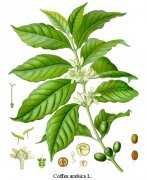
Coffee cultivation techniques detailed explanation of planting knowledge of Coffee trees
Coffee, cocoa and tea are called the three major beverages in the world, and their output, consumption and output value all rank first. In addition to being used as a beverage, coffee can also extract caffeine and coffee oil; in medicine, it can be used as an anesthetic, stimulant and diuretic cardiotonic agent. Coffee pulp can be used to make wine, vinegar, pectin and molasses; dried pulp can be used as animal feed; dried fruit shell can be used as fertilizer and burning

Cultivation techniques of Coffee Tree Seedling Propagation and Establishment of Coffee Garden
(1) Seedling propagation Coffee seedling propagation can be divided into seed propagation and asexual reproduction. 1. Seed propagation (1) seed collection, seed washing and seed storage during the full ripening period of coffee (the full ripening period of medium-grain coffee in Hainan Island is from February to March, and that of small seed is from September to November). The fully ripe fruits are picked from strong and high-yielding mother trees to make seeds. After the fruit is harvested, peel and wash the seeds immediately. The method is to remove the fruit.

The branches of coffee can be divided into the following categories according to their location and growth direction.
The branches of coffee can be divided into the following categories according to their growing position and growth direction: a branch: there are two kinds of buds in the axils of the main leaves of coffee. The opposite branch is drawn laterally from the upper bud of the trunk (developing at the same time as the terminal bud of the trunk), which is called a branch. Second branch: a branch drawn from the axil of a branch at an angle of 45-60 degrees is called a second branch, which is shorter than a branch. A branch regularly drawn from the axils of a bifurcated leaf.
Cultivation and cultivation of High-quality Coffee
(1) Seedling propagation Coffee seedling propagation can be divided into seed propagation and asexual reproduction. 1. Seed propagation (1) seed collection, seed washing and seed storage during the full ripening period of coffee (the full ripening period of medium-grain coffee in Hainan Island is from February to March, and that of small seed is from September to November). The fully ripe fruits are picked from strong and high-yielding mother trees to make seeds. Immediately after the fruit is harvested, peel and wash the seeds. The method is to place the fruit.

Cultivation techniques and Biological habits of Coffee Tree
2. Biological habits (1) Botanical characteristics (2) growth and flowering habits (3) requirements for environmental conditions (1) Botanical characteristics 1. Root coffee root is a conic root system, its morphology, distribution and depth vary with agro-technical measures, soil conditions and varieties. In the case of a political party, there is a thick and short main root and many developed lateral roots. According to the observation in Hainan Island
The technique of growing small Coffee-- integral pruning
Cultivation technique of small-grain coffee: integral pruning. Single trunk plastic surgery is a method of cultivating a trunk, using the primary branch as the backbone branch and the secondary and tertiary branches as the main fruiting branch.
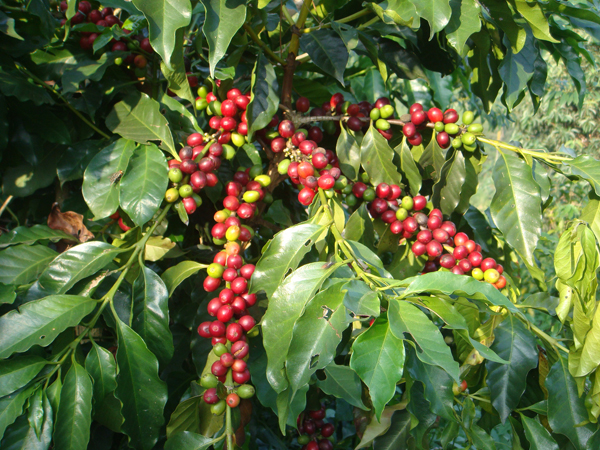
Explain the planting and cultivation of coffee trees in detail to understand the growth environment and needs of coffee trees.
(1) Seedling propagation Coffee seedling propagation can be divided into seed propagation and asexual reproduction. 1. Seed propagation (1) seed collection, seed washing and seed storage during the full ripening period of coffee (the full ripening period of medium-grain coffee in Hainan Island is from February to March, and that of small seed is from September to November). The fully ripe fruits are picked from strong and high-yielding mother trees to make seeds. Immediately after the fruit is harvested, peel and wash the seeds. The method is to place the fruit.